

Skin cancer is one of the leading causes of death among people with albinism globally. It is a devastating and silent reality: a health risk that drastically shortens life, especially in tropical regions and resource-limited settings. What is most frustrating is that this is a completely preventable tragedy.
At Beyond Suncare, we operate on two interconnected levels: direct defence against skin cancer in Sub-Saharan Africa and the representation of the rights of people with albinism within institutional spheres. We unite action on the ground with international political advocacy because we know that real change requires transforming healthcare and major decisions at the same time.
For this very reason, we participated in the first World Forum on Skin Cancer Prevention and Management in Persons with Albinism, held in Cape Town. This meeting was led by organisations we work with side by side, such as the International League of Dermatological Societies (ILDS), Standing Voice and The Global Albinism Alliance. There, we managed to unify efforts alongside a multidisciplinary community of experts, dermatologists, scientists and international bodies such as the WHO and the IARC to build a Global Action Plan.
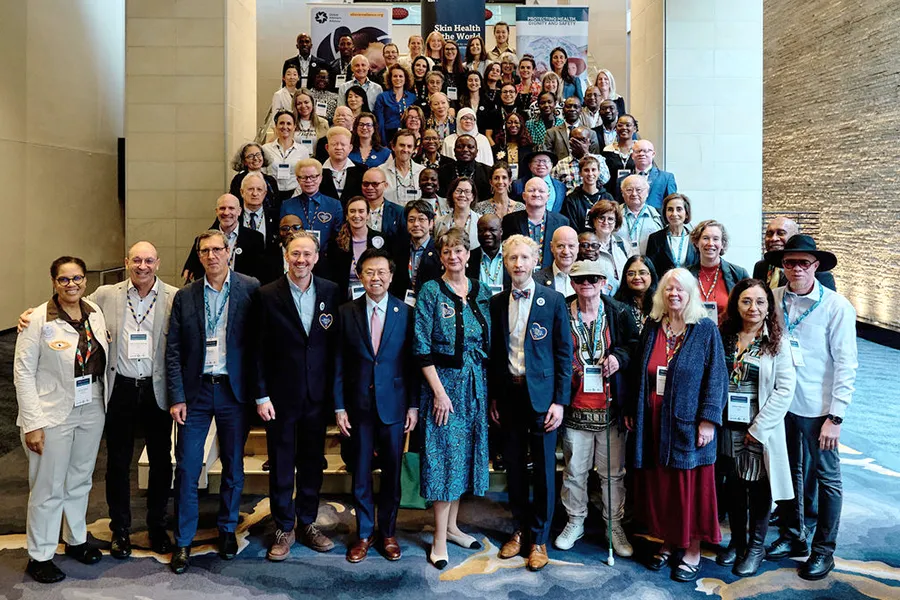
The forum report sets out technical conclusions and critical denunciations that demand an immediate response. (read the full report here).
1. The lack of data rendering the severity of this crisis invisible
The lack of current data in medical registries hides the true severity of skin cancer within this collective. Without accurate registries or disaggregated data, the primary cause of death for people with albinism in the tropics continues to be left out of official statistics, blocking the arrival of resources..
2. Excluded from climate change adaptation policies
The second major denunciation of the report is climate and medical exclusion. Despite directly suffering from the global increase in ultraviolet radiation, people with albinism continue to be left out of climate change adaptation and cancer prevention policies. The direct result of this political vacuum is a critical lack of access to basic preventive measures and medical-grade photoprotection in the highest-risk areas.
3. Prevention as the central focus
The forum’s technical report insists on a fundamental premise: skin cancer in people with albinism is largely preventable. To halt mortality, the strategy must rest upon three indispensable operational pillars: regular access to sunscreens, protective clothing and shade structures; early education on the risks of UV exposure from childhood; and routine dermatological check-ups alongside the immediate treatment of precancerous lesions.
In this context, the forum celebrated a historic political breakthrough: the WHO’s decision to include sunscreen for people with albinism on the Essential Medicines List. This achievement breaks a historic barrier and becomes the definitive technical tool to demand public procurement and the free distribution of sun protection creams from national governments.
4. The science exists; the current challenge is political will
No one should die from a cancer that can be prevented; the science and the tools exist. The current challenge is not medical; it is about coordination, resources and political will. The technical document from this world forum is not an archive for remembrance, but a binding roadmap to compel ministries of health to integrate this emergency into their national agendas. International cooperation and coordinated institutional action are the only real strategy to save lives.
Political advocacy takes time, but people with albinism in Sub-Saharan Africa need protection right now. With your support, we can guarantee continuous access to medical-grade photoprotection and dermatological check-ups in the highest-risk areas.
