

For decades, dermatological diseases have remained one of the least visible priorities in international health, despite affecting billions of people worldwide. This reality is beginning to shift following the adoption of Resolution WHA78.15 by the World Health Assembly—a milestone that, for the first time, recognises skin diseases as a specific area of global healthcare concern.
Against this backdrop, the World Forum on Skin Cancer Prevention and Management in Persons with Albinism, held in Cape Town in October 2025, convened international institutions, ministries of health, healthcare professionals, and civil society organisations. Beyond Suncare participated in this gathering, which focused on cooperation, prevention, and the urgent need for expanded research and strengthened health systems, particularly in low- and middle-income countries.
During the forum, we had the opportunity to interview José Ruiz Postigo, a leading international figure in public health and dermatology at the World Health Organization (WHO), to analyse the scope of this historic recognition and its implications for frontline projects.
José Ruiz Postigo: A Global Vision from the WHO
With nearly three decades of experience, José Ruiz Postigo has dedicated his career to working in and for countries where access to even the most basic health services remains a challenge. From his current position as a Medical Officer in Geneva, his work centres on coordinating international efforts, supporting ministries of health, and bridging the gap with organisations working closely with patients.
His career combines direct clinical work in contexts of extreme vulnerability—treating patients in rural Africa—with a strategic vision aimed at transforming public policy on a large scale. This dual perspective allows him to understand both the specific needs of affected individuals and the mechanisms required to generate sustained change within health systems.
A long-awaited recognition
In the words of José Ruiz Postigo, the recent World Health Assembly resolution is a fundamental step towards placing skin health on the international political agenda.
“This step is incredibly important, as dermatological diseases have been recognised at the level of the World Health Assembly, where all the world’s health ministries adopt resolutions that set global priorities,” he explains.
This recognition does more than just make the true burden of these pathologies visible; it creates a clear framework for action. Thanks to Resolution WHA78.15, various stakeholders—public institutions, social organisations, and academic bodies—can remind health ministries of the commitments they have made and offer support to drive concrete changes that improve patients’ lives.
Ruiz Postigo emphasises that this need had been ignored for years:
“Approximately 5 billion cases of skin disease are diagnosed annually worldwide, and in many low- and middle-income countries, knowledge, diagnosis, and treatment are woefully deficient.”
Opportunities for frontline organisations
For organisations such as Beyond Suncare, this new framework opens a concrete window of opportunity. The formal recognition of dermatological diseases allows for a dialogue with health ministries from a position of strength, backed by international commitments.
Regarding this, José Ruiz Postigo notes: “I hope that, thanks to the WHO resolution, your voice can be heard more attentively by ministries of health and that the great work you do to help these vulnerable people will be facilitated.”
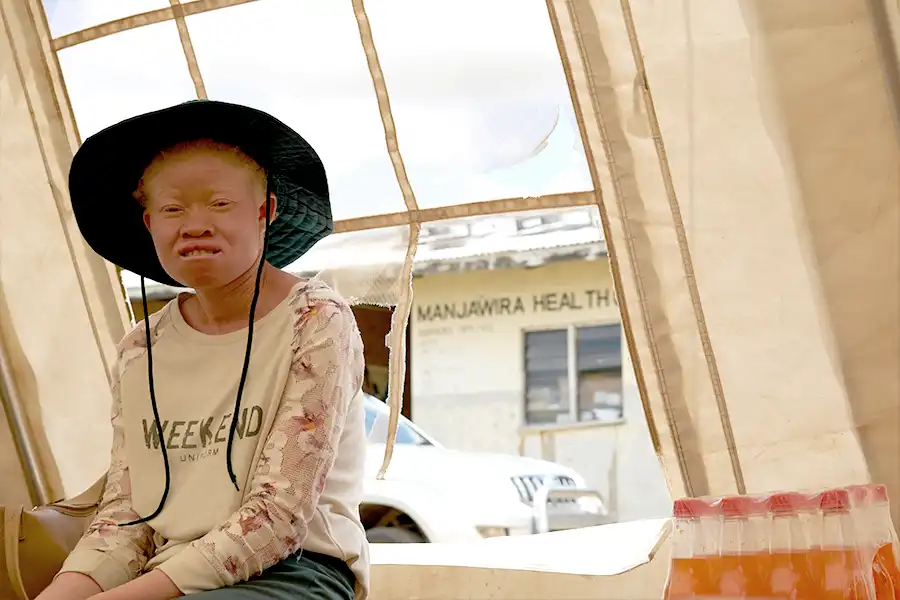
For the WHO, this progress also allows for the foundation of closer collaboration with organisations working directly with particularly vulnerable populations, such as people with albinism, whose risk of skin cancer remains alarming in many African countries.
The key role of civil society and local initiatives
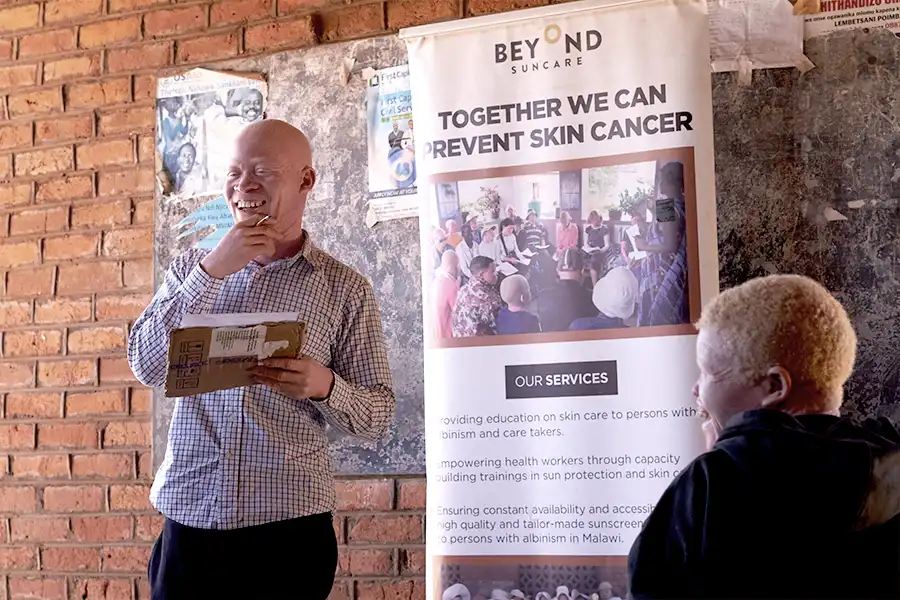
One of the central messages of the interview is the irreplaceable value of civil society organisations. In many contexts, these entities emerge to fill the gaps where public systems do not reach.
Ruiz Postigo explains clearly: “Organisations that emanate from civil society do so to fill a void that exists because health ministries are not managing to cover the needs of the population.”
A lack of qualified medical staff, limited access to specialists, and economic barriers hinder early diagnosis and treatment. Added to this, in many cases, is the influence of misconceptions regarding certain diseases, which delays patients seeking medical attention. “Organisations that manage to work in these ‘healthcare deserts’ are going to contribute in a very necessary and pertinent way,” he adds.
Global gaps in access, prevention, and treatment
Among the main challenges to ensuring skin health as a universal right, the training of primary care staff is a top priority.
According to José Ruiz Postigo:
“The priority should be to train health staff working in primary care, in both urban and rural areas.”
These staff members—nurses, public health workers, and community agents in many cases—constitute the first point of contact with the health system. This training is coupled with the need to educate the general population and the most susceptible groups, as well as ensuring access to preventive measures.
Ruiz Postigo also warns of other persistent obstacles: “Access to preventive measures remains a major challenge due to cost, lack of supply, or the stigma they generate; furthermore, the treatment of certain pathologies requires resources that are not easily available in many parts of the world.”
Looking to the future: cooperation and coordinated action
Following the approval of the resolution, the WHO is working on the development of a global action plan that will define specific activities, responsibilities, costs, and potential sources of funding.
Ruiz Postigo summarises it as follows:
“One of the main tasks of the WHO is to coordinate and establish bridges between health ministries and other organisations, obtain resources, and direct them to the places in greatest need.”
The message he delivered during the World Forum is clear and direct: “It is important to involve all actors who can be part of the solution.”
This vision reinforces the idea that only through cooperation between international institutions, governments, and local organisations will it be possible to achieve sustained progress.
Key Conclusions
-
A Milestone: The WHO’s recognition of dermatological diseases marks a turning point in global health.
-
Legitimacy: This progress strengthens the role of international cooperation and legitimises the work of organisations acting on the frontline.
-
Essential Pillars: Prevention, education, and the strengthening of primary care are vital to reducing the disease burden, especially in vulnerable populations such as people with albinism.
-
The Future: The future of skin health depends on solid alliances, concrete action plans, and a shared vision: making dermatological care a real and accessible priority for everyone.
The challenge now is to translate this recognition into tangible actions—more training, more prevention, and more resources on the ground—that effectively improve the lives of those who are currently left out of the system.
