

On 27 and 28 October 2025, specialists in dermatology, public health, and human rights, alongside representatives from albinism communities worldwide, gathered in Cape Town. The occasion was the World Forum on Skin Cancer Prevention and Management in Persons with Albinism, organised by the Global Albinism Alliance, the International League of Dermatological Societies, and Standing Voice. The objective was to share knowledge and advance towards tangible solutions for preventing and treating skin cancer in people with albinism, particularly in sub-Saharan Africa, where incidence and mortality rates remain alarmingly high.
To better understand the scope of the forum and its practical implications, we spoke with Harry Freeland, Executive Director of the NGO Standing Voice. The trajectory of this partner organisation is deeply linked to defending the rights and health of people with albinism in Africa. For over a decade, the organisation has developed skin cancer prevention programmes and promoted social inclusion. This evidence-based fieldwork, conducted in direct collaboration with communities, served as a benchmark for many of the debates held during the forum.
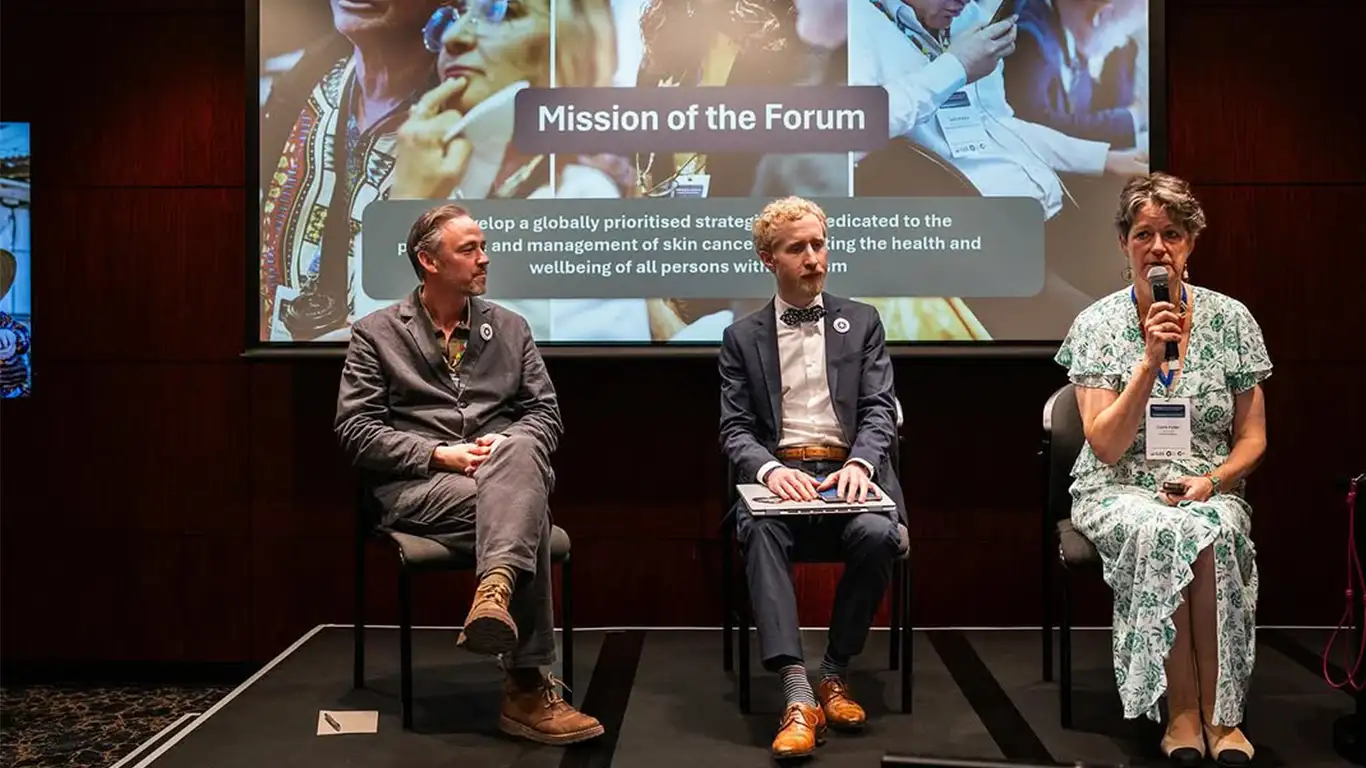
From right to left: Harry Freeland (CEO, Standing Voice); Antoine Gliksohn (Global Albinism Alliance); Dr Claire Fuller (The International League of Dermatological Societies)
A global meeting point
The conversation began by assessing the forum and the impact of its organisation.
“Seeing so many of the world’s leading experts gathered in one room was, in itself, a major milestone for our movement,” Freeland noted.
While it may seem simple, never before had dermatologists, researchers, public health specialists, human rights advocates, and leaders of albinism associations from so many countries gathered simultaneously in a shared space.
“There was a very special energy, a clear sense of shared purpose. This is something that cannot be captured in reports or statistics.”
The forum also provided a platform to share experiences from prevention and treatment programmes already operating on the ground. Many of these stem from a key premise: sun protection must be integrated into health systems. In this regard, the forum highlighted the World Health Organization’s recognition of broad-spectrum sunscreen as an essential medicine—a vital step in driving its integration into national health policies.
Coordinating action through new alliances
We also enquired about the types of collaborations that emerged from this encounter.
“The new alliances that have formed point towards a new stage of coordinated global action.”
For Freeland, one of the most promising outcomes has been the building of bridges between disciplines that traditionally worked in isolation.
“Clinicians, human rights advocates, and NGO leaders have begun to share knowledge and resources in a more structured way.”
Among the commitments beginning to take shape is the drafting of a Global Action Plan prioritising five key areas: policy advocacy, photoprotection, clinical capacity, access to dermatological services, and research.
The idea is simple yet ambitious: ensuring that community initiatives, scientific research, and public policy all move in the same direction.
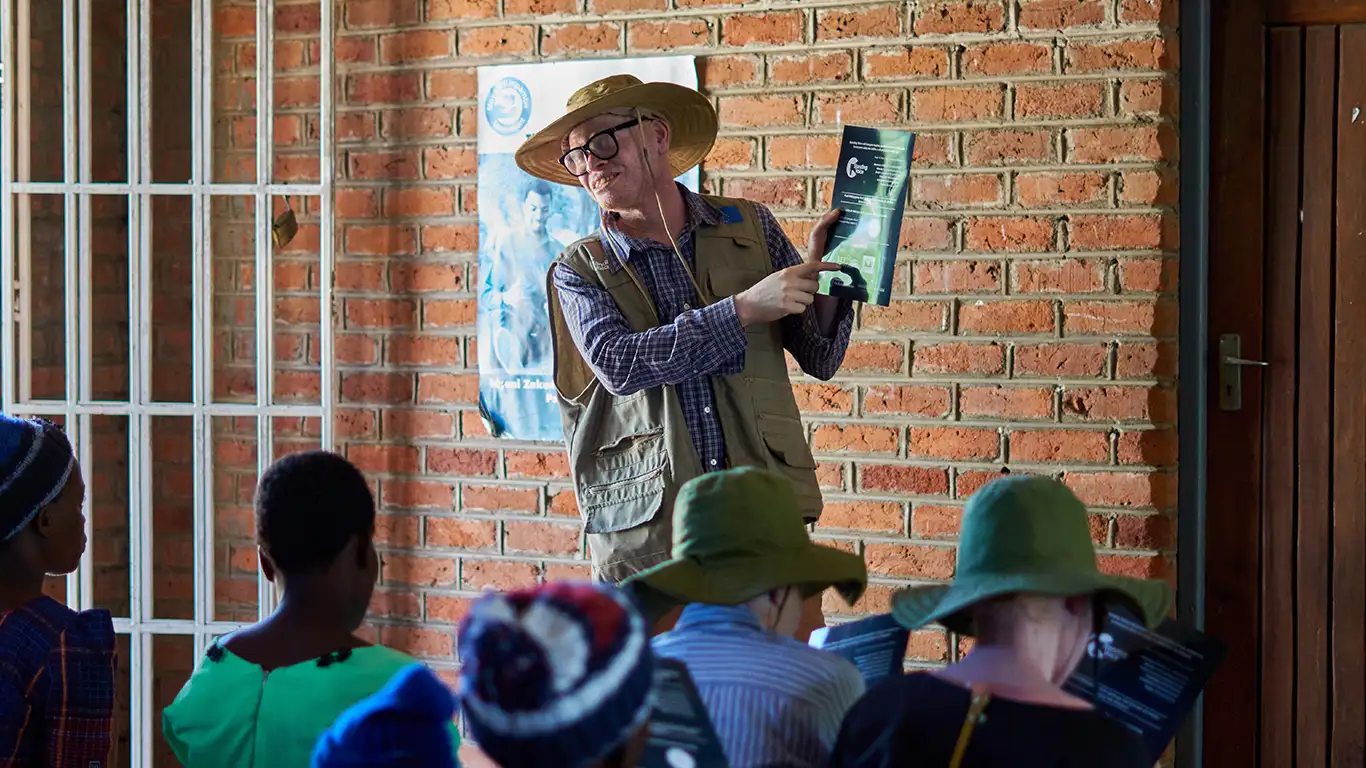
Dermatology clinic in Malawi.
The challenges that remain
Despite the progress, Freeland insists that the challenge remains enormous, especially in regions with fragile healthcare systems.
“Without robust data demonstrating what works, it is difficult for governments to prioritise the needs of people with albinism.”
In many African countries, prevention faces very specific obstacles: a shortage of dermatologists, a lack of healthcare infrastructure, and difficulties in accessing basic products such as sunscreen or protective clothing.
Socio-economic barriers add to these hurdles: transport costs, stigma, and a lack of information continue to impede access to healthcare. This prevents many from receiving life-saving treatments in time.
The solution lies in strengthening health systems, sustained investment, and developing innovative strategies that bring services closer to the communities.
Applied medicine in a social context
The forum also addressed a topic often left out of clinical debates: the social context in which people with albinism live.
“If we put people with albinism at the centre, we can build more comprehensive solutions.”
For Freeland, guaranteeing equitable access to dermatological care involves listening to communities and designing policies that reflect their daily reality. This includes integrating sunscreen into national health programmes, but also training teachers, families, and community leaders.
Social determinants, such as education, economic opportunities, and psychological support, also influence skin cancer prevention.
“When people have the information, confidence, and resources to protect themselves, prevention becomes possible.”
A message for governments and society
Before concluding our conversation, we asked Freeland to summarise the message this forum should send to the world.
“Skin cancer in people with albinism is preventable and treatable. But only if we act together.”
Responsibility is shared. Governments must guarantee access to basic protection and dermatological check-ups. Health professionals must incorporate culturally appropriate prevention strategies. And society has a key role to play in the fight against stigma.
“This is not just a medical issue. It is, above all, a matter of human rights.”
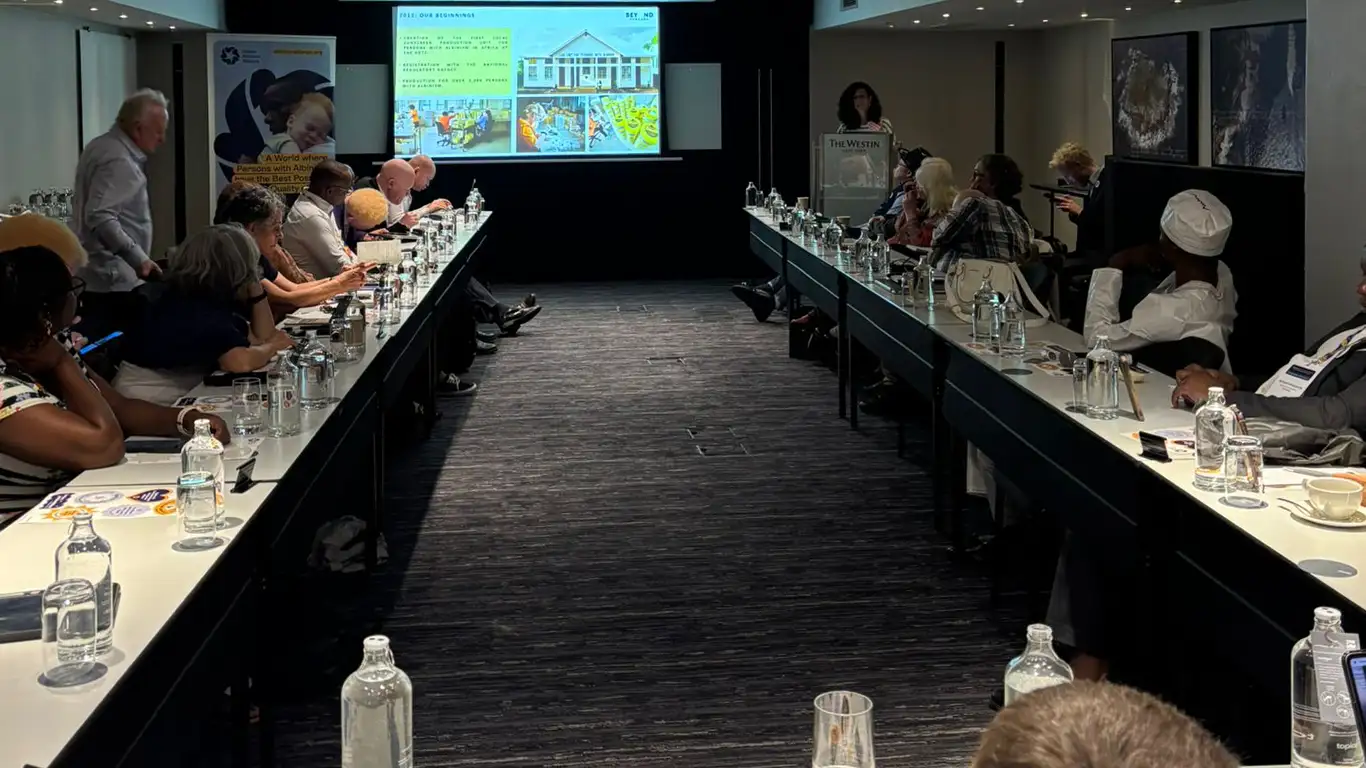
Presentation by Mafalda Soto (Beyond Suncare).
What lies ahead
The World Forum on Skin Cancer Prevention and Management in Persons with Albinism did not solve every problem, but it did leave behind something significant: a roadmap and a network of stakeholders now working with a shared vision.
Organisations such as Standing Voice and Beyond Suncare are well aware of the gap that still exists between scientific evidence and the daily reality of many communities. The challenge now is to convert accumulated knowledge into public policies, sustainable programmes, and accessible solutions.
Behind the data and figures are real lives, individuals and families who deserve to live in safety and have the right to dream of a future. As Freeland reminded us during the conversation, the skin cancer affecting so many people with albinism remains, to a large extent, a preventable disease.
The question is no longer whether we know how to do it. The question is whether we are willing to do it at the scale and with the urgency that the situation demands.
