

For many children, going back to school means reuniting with friends, opening new notebooks, and discovering fresh learning experiences. However, for those born with albinism, school can become a place filled with obstacles. Low vision, combined with a lack of resources and understanding, turns what should be a space for learning into an environment of frustration.
How albinism affects vision
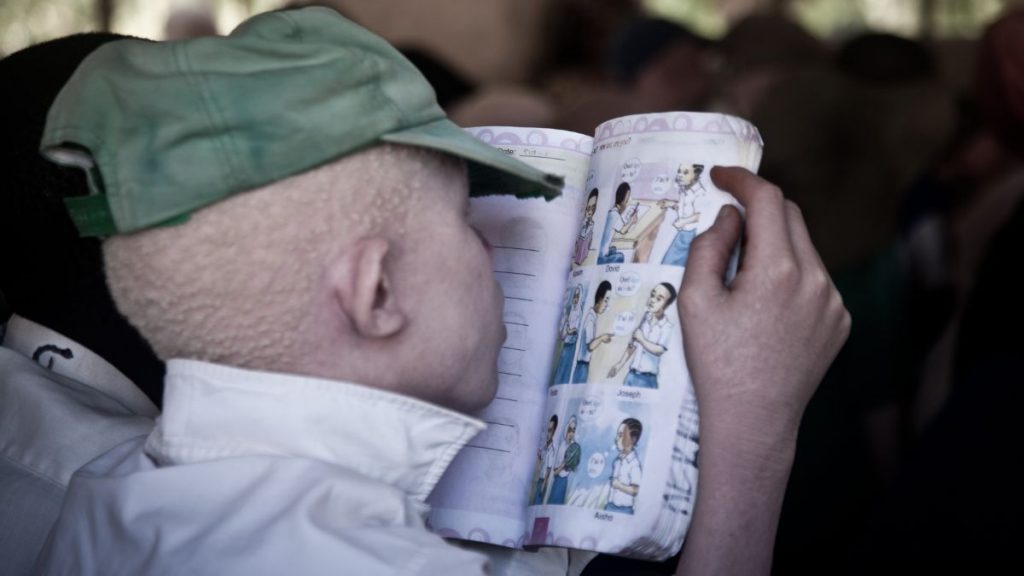
Albinism goes far beyond the lack of pigment in the skin and hair. One of its most defining—and least visible—consequences is visual impairment. Extreme sensitivity to light, difficulty focusing on distant objects, and involuntary eye movements make seemingly simple tasks—such as reading the board, recognizing a face from afar, or identifying a traffic sign—significantly more challenging.
While their classmates quickly copy what the teacher writes, a child with albinism may fall behind, struggling to make out blurry letters against the bright background of the board.
Credit: Daniel Losada
The impact on education and self-esteem
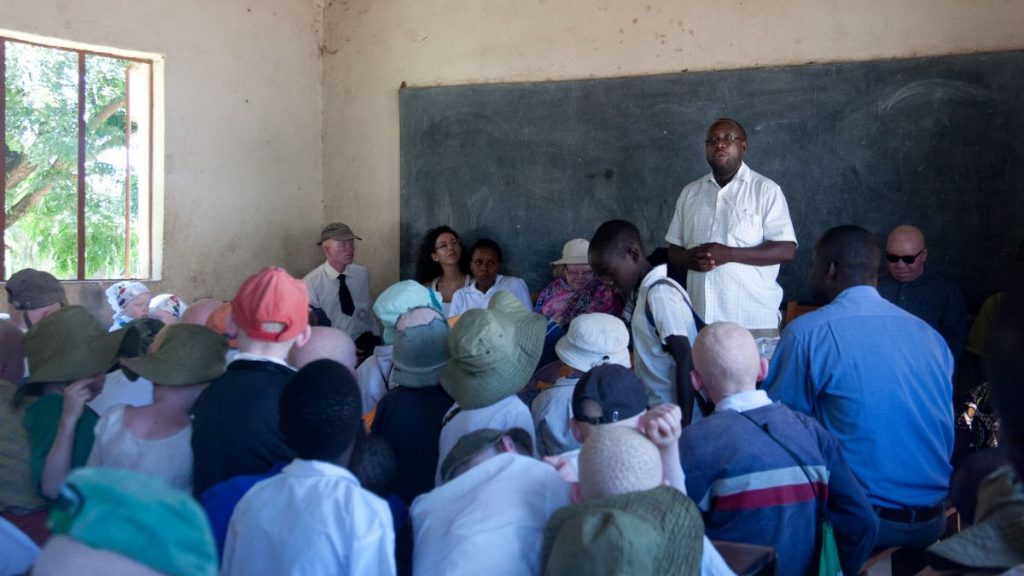
Low vision associated with albinism has a direct impact on the academic performance of children living with this condition. Difficulties in reading the board, keeping up with the pace of the classroom, or accessing non-adapted learning materials lead to learning delays and a constant feeling of “falling behind.” This situation not only limits educational development but also erodes self-esteem, fueling feelings of frustration, insecurity, and exclusion. In the long term, these barriers affect opportunities for education, employment, and autonomy, shaping futures and perpetuating inequality. Ensuring appropriate support from an early age is therefore essential so that every child with albinism can learn, grow, and envision a future without limits.
The experience of Patty Bonnet, shared in a testimonial for the ALBA Association, illustrates what many children live through in silence:
“Sometimes when I use public transportation, it’s impossible for me to see the bus number. At school, it was the same with the board: while others were copying, I had to guess what was written. It’s frustrating, because you know your ability is there, but your eyesight doesn’t allow you to show it.”
Credit: Daniel Losada
Solutions that transform lives
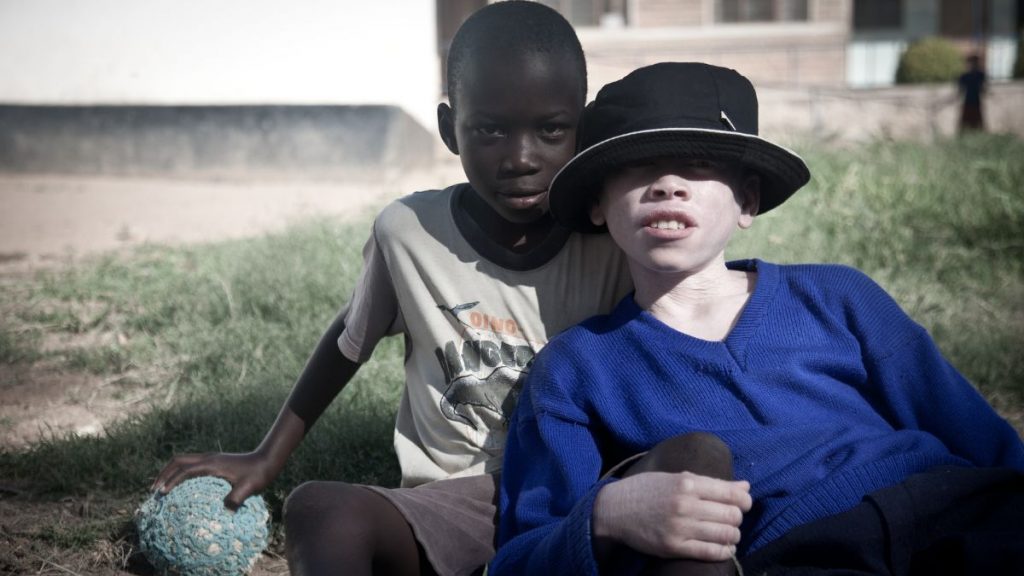
At Beyond Suncare, we know that caring for vision is just as vital as protecting the skin. That is why we work to ensure that children with albinism can access sunglasses that ease photophobia, magnifying glasses that help them read up close, and holistic support that strengthens their self-esteem and helps them navigate school life with confidence.
In addition, we promote awareness within educational communities to challenge prejudice and open the door to genuine inclusion. Because it is not only about seeing better, but about feeling seen and recognized.
Credit: Daniel Losada
Join us and make a difference
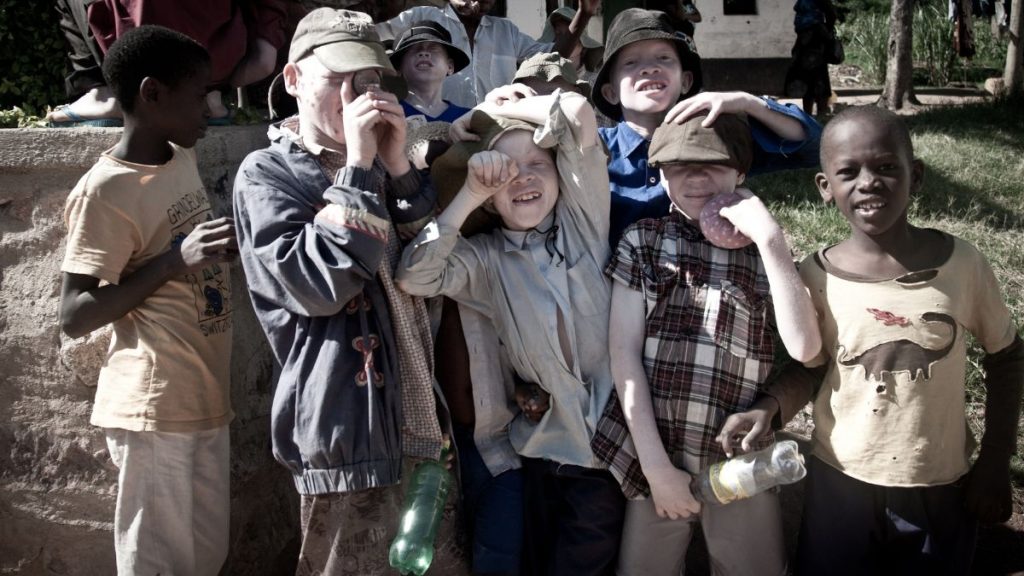
Thanks to the generosity of our donors, hundreds of children with albinism have already received glasses, sunscreen, and specialized support. But thousands more still face the daily challenge of studying without being able to clearly see what is happening around them.
With your support, we can reach more schools, support more families, and offer more children the opportunity to learn on equal terms. Every donation is an investment in future, dignity, and hope.
Crédito: Daniel Losada
Join our campaign and help us continue promoting equal access to education. Donate at beyondsuncare.org/donate | Bizum: 03864
